Moroccan Caftan: A Timeless Masterpiece, cultural icon and symbol of enduring beauty
Table of Contents
I. Introduction: More Than Just a Dress!
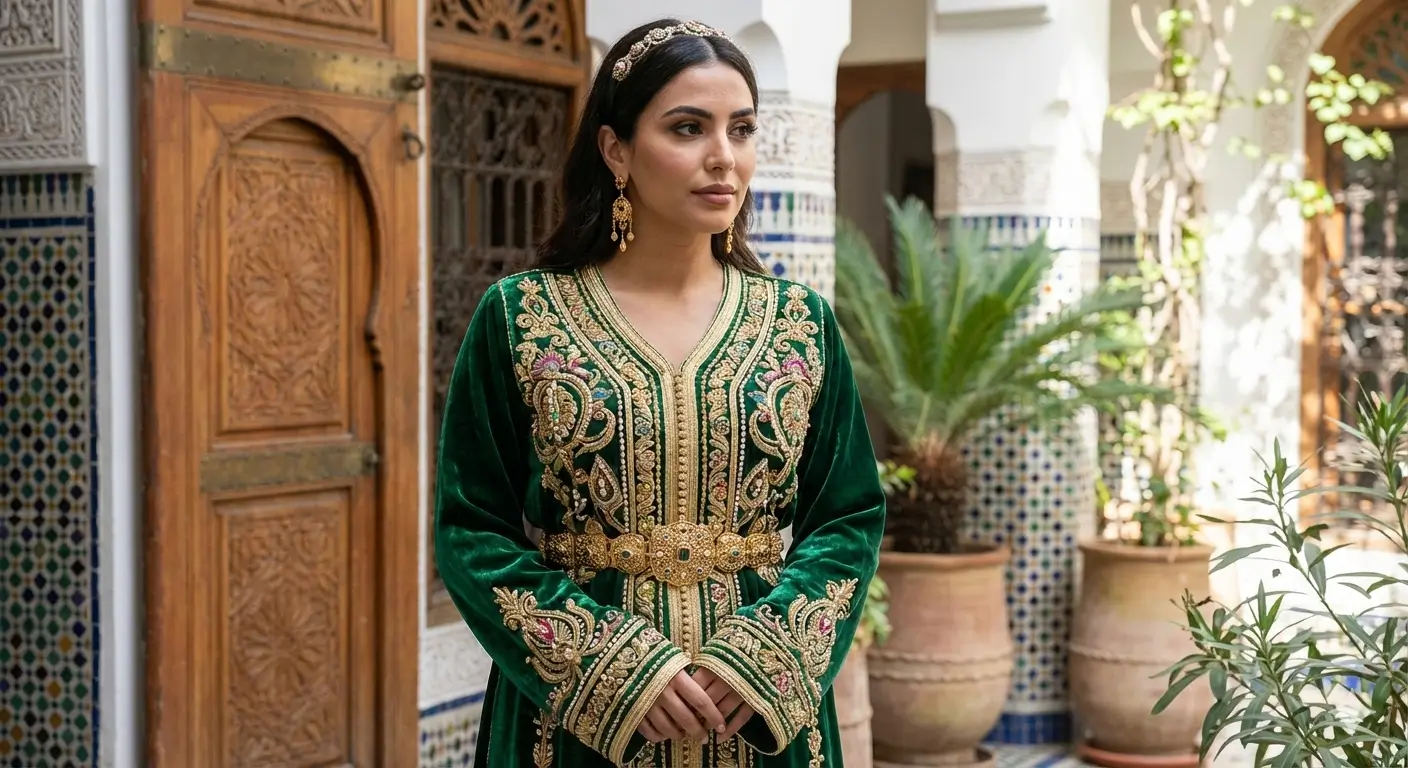
The Moroccan caftan is a long, elegant garment known for flowing lines, rich fabrics, hand-finished details, and deep cultural meaning. Worn at weddings, celebrations, formal events, and fashion shows, it remains one of the most recognizable symbols of Moroccan fashion.
This guide explains the history of the caftan in Morocco, its main design elements such as sfifa, akaad, embroidery, belts, and luxury fabrics, and how it differs from the more formal layered Moroccan takchita.
It also looks at the caftan’s modern role, from Moroccan couture and Caftan Week to questions of cultural heritage, craftsmanship, sustainability, and respectful appreciation.
II. Chapter 1: Where Did This Gorgeousness Come From? A Caftan Origin Story
Forget quick trends, the caftan has roots older than your grandma’s secret recipe! This isn’t fast fashion; this is slow history, meticulously stitched into every seam.
The Ancient Whispers: Tracing back possibly to the 8th century, it’s a true melting pot, influenced by Arab, Andalusian, Ottoman, and Persian cultures. Think ancient elegance! Imagine the spice routes, the Silk Road, the exchange of ideas and aesthetics all culminating in this one garment.
A Royal Beginning: Historians mostly point to Andalusian influences during Islamic rule in Spain. It wasn’t just a robe; it was the robe for kings and sultans, starting from the Almohad dynasty in the 12th century (and initially, it was surprisingly simple!). Think of the power it represented, the authority draped over shoulders that shaped history.
Dynasty Diaries – The Glow-Up:
- Marinid Era: From humble beginnings to sumptuous style! We’re talking brocade, silk, and gold threads making their grand entrance. The caftan began its metamorphosis, shedding its simplicity for opulence.
- Saadian Chic (16th Century): Sultan Ahmed Al Mansour literally put his name on it (“Al-Mansouria”) and made it a two-piece wonder. This is also when women started rocking it, paving the way for the famous “Takshita” (layered caftan with a belt!). A garment named after a ruler, a testament to its importance! The shift towards female empowerment, the caftan becoming a symbol of grace and style.
- The Feminine Takeover: By the 17th century, it was the dress for Moroccan women, adorned with intricate embroideries. By the 19th century, it was officially a women-only show, flirting with imported silks from Lyon and China. Imagine the bustling marketplaces, the clinking of teacups, the women adorned in their finery, each caftan a unique expression.
Local Flair: It’s not just one caftan! Each Moroccan region – Fes, Marrakech, Tetouan – has its own unique style and embroidery secrets. It’s a tapestry of traditions, each city weaving its own story into the fabric.
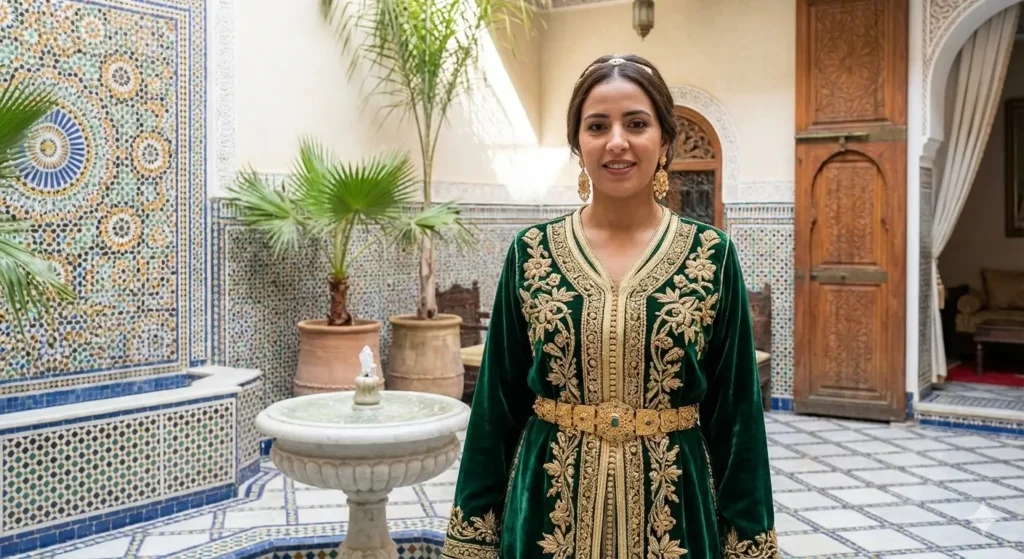
The Caftan’s DNA: Think “Sfifa” (braiding), “Aakad” (handmade buttons), luxurious fabrics, and the “Mdamma” (that show-stopping wide belt). These aren’t just details; they are the essence, the building blocks of this sartorial masterpiece.
III. Chapter 2: The Caftan in the Spotlight: Ruling Today’s Fashion Scene
From ancient courts to catwalks! The Moroccan caftan isn’t just surviving; it’s thriving and setting trends. It’s a phoenix risen from the sands of time.
Global Glamour: You’ve seen it! From Paris to New York Fashion Week, the caftan is a red carpet regular, embraced by international luxury brands like Oscar de la Renta and Tory Burch. A symbol of elegance gracing the world’s most prestigious stages.
Tradition Meets Trend: Designers are doing magic, keeping the caftan’s soul but adding bold cuts, modern adjustments, and cool new fabrics (hello, organza!). It’s all about fluidity, lightness, and that ceremonial aura. A delicate dance between heritage and innovation, tradition and modernity.
Hot for 2024-2025:
- 2024: Think fresh white, elegant powdery pink silk, versatile blue turquoise sets, and classic gold embroidery. A palette of dreams, a symphony of colors designed to enchant.
- 2025: The black caftan gets a minimalist makeover. Cotton for comfort, satin for sparkle, silk for brides. And those belted styles? Seriously flattering! Plus, layered designs and statement sleeves are making waves. A reinvention of classics, a modern take on timeless elegance.
A Rainbow of Riches: Vibrant emeralds, royal blues, deep maroons share the stage with chic neutrals. A kaleidoscope of colors, each hue telling a story, evoking emotions.
Moroccan Maestros: Shout out to designers like Selma Benomar, Lamia Akil, Laila Aziz, and Bouchra Filali Lahlou who are taking Moroccan haute couture global. The torchbearers, the ambassadors of Moroccan artistry, showcasing their talent to the world.
Caftan Week: Marrakech is where it’s at! This event is like the Met Gala for caftans, showcasing cutting-edge designs and reaffirming Morocco’s fashion status. A celebration of craftsmanship, a testament to Morocco’s place in the global fashion landscape.
IV. Chapter 3: The Caftan’s Culture Wars: Who Owns the Sparkle?
It’s beautiful, it’s beloved, and sometimes… it’s controversial! The price of fame, the burden of being a cultural icon.
The Appropriation Problem: The caftan, like many cultural treasures, has found itself at the center of heated debates, especially regarding cultural appropriation and intellectual property. A delicate balance between appreciation and exploitation, respect and theft.
Morocco vs. Algeria: The UNESCO Showdown:
- Algeria’s alleged attempts to claim elements of the caftan in their UNESCO submissions sparked outrage in Morocco. Remember that “Caftan Ntaa El Fassi” incident in Amsterdam? Morocco put its foot down! A battle for cultural ownership, a fight to protect heritage.
- Morocco’s Win! In December 2025, Morocco secured a monumental victory: the “Moroccan Caftan: Art, Traditions and Know-How” was officially inscribed on UNESCO’s Intangible Cultural Heritage list. This recognized the caftan’s unique Moroccan evolution, craftsmanship, and techniques. Mic drop! A triumph for Moroccan culture, a validation of its unique heritage.
- Algeria’s Response: While Morocco got a dedicated inscription, Algeria also managed to get the caftan explicitly mentioned in some of its existing cultural heritage listings. The diplomatic dance continues! A nuanced situation, a complex web of cultural claims and political maneuvering.
Legal Shields Up!
- Beyond UNESCO, Morocco is protecting its fashion icon with legal muscle. The caftan is officially registered with the World Intellectual Property Organization (WIPO) until 2035 (and renewable!). A legal fortress, a shield against unauthorized imitation.
- A July 2025 agreement with WIPO means Morocco can fight unauthorized imitation and even track illegal use of its cultural designs. A proactive approach, safeguarding the caftan’s integrity and authenticity.
- The “Label Maroc” is coming, a mark of excellence to ensure authenticity. A seal of quality, a promise of genuine Moroccan craftsmanship.
Appreciation vs. Appropriation: It’s a fine line. Experts say to understand its origins, respect its history, and choose appropriate occasions if you’re rocking a caftan outside Moroccan culture. Knowledge is key, respect is paramount.
V. Chapter 4: The Caftan of Tomorrow: Sustainable, Digital, and Still Stunning
What’s next for this magnificent garment? Innovation, ethics, and a whole lot of tech! The future is bright, the possibilities endless.
Green Glamour:
- Morocco is becoming a hotbed for sustainable fashion. Think organic cotton, recycled materials, natural dyes – the caftan is perfectly suited for this eco-friendly movement! A commitment to ethical practices, a harmonious blend of fashion and sustainability.
- The government is on board with subsidies and tax incentives. Plus, women’s cooperatives are leading the charge, creating ethically produced, handmade caftans. A collaborative effort, empowering women and promoting sustainable practices.
- Even AI is getting involved, helping to optimize production and reduce waste! Technology meets tradition, efficiency meets ethics.
- Shout out to brands like Marrakshi Life and Kenza Bennani for their amazing sustainable caftan creations! The pioneers, the innovators, the champions of ethical fashion.
Digital Dazzle:
- E-commerce is blowing up in Morocco, especially for fashion! Online shopping is projected to hit $1.7 billion by 2025. A digital revolution, a new era of accessibility and convenience.
- Digital platforms are literally putting Moroccan artisans and their caftans on the global map, bypassing traditional shops. Think Boksha.com, RobeDesert, Mautassin – making caftans accessible worldwide. Connecting artisans to the world, breaking down barriers and expanding horizons.
- AI vision tools are making online caftan displays look even more stunning, and “Digital Artisans” are the new generation telling the caftan’s story online. The art of storytelling in the digital age, preserving heritage and inspiring future generations.
Modern Makeovers: Expect contemporary cuts, bold prints, and new fabrics, all while honoring the caftan’s traditional soul. Customization is also a huge trend! A fusion of styles, a personalized expression of individuality.
“Made in Morocco” – The Future is Bright: Morocco is aiming for an upmarket position, blending technology, sustainability, and quality to make its caftans a symbol of excellence globally. A vision of excellence, a commitment to quality, a symbol of Moroccan pride.
VI. Conclusion: The Caftan’s Enduring Legacy
From ancient royal attire to a global fashion statement, the Moroccan caftan truly is a living legend. A timeless masterpiece, a cultural icon, a symbol of enduring beauty.
It’s a testament to Morocco’s rich cultural heritage, its incredible artisanal skill, and its dynamic evolution in the modern world. A tribute to creativity, a celebration of tradition, a reflection of Morocco’s vibrant spirit.
Whether you are admiring its embroidery or wearing one yourself, the Moroccan caftan connects personal style with a long tradition of craftsmanship, celebration, and cultural identity.
Frequently Asked Questions About the Moroccan Caftan
What is a Moroccan caftan?
A Moroccan caftan is a long, flowing garment often made with elegant fabric, embroidery, braided trim, handmade buttons, and a decorative belt. It is commonly worn for weddings, celebrations, and formal occasions.
What is the difference between a caftan and a takchita?
A caftan is usually a single-piece garment, while a takchita is more formal and layered, usually combining an inner dress, an ornate outer layer, and a belt.
When do Moroccans wear caftans?
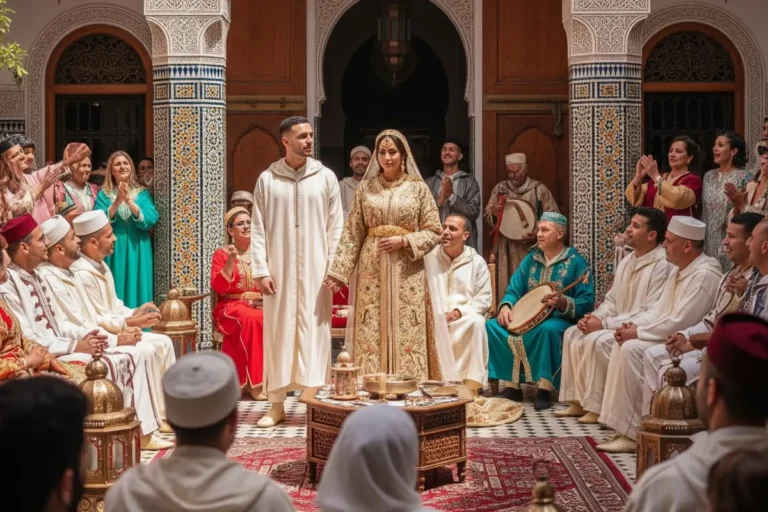
Moroccan caftans are worn at weddings, Eid celebrations, family ceremonies, formal gatherings, and cultural events.