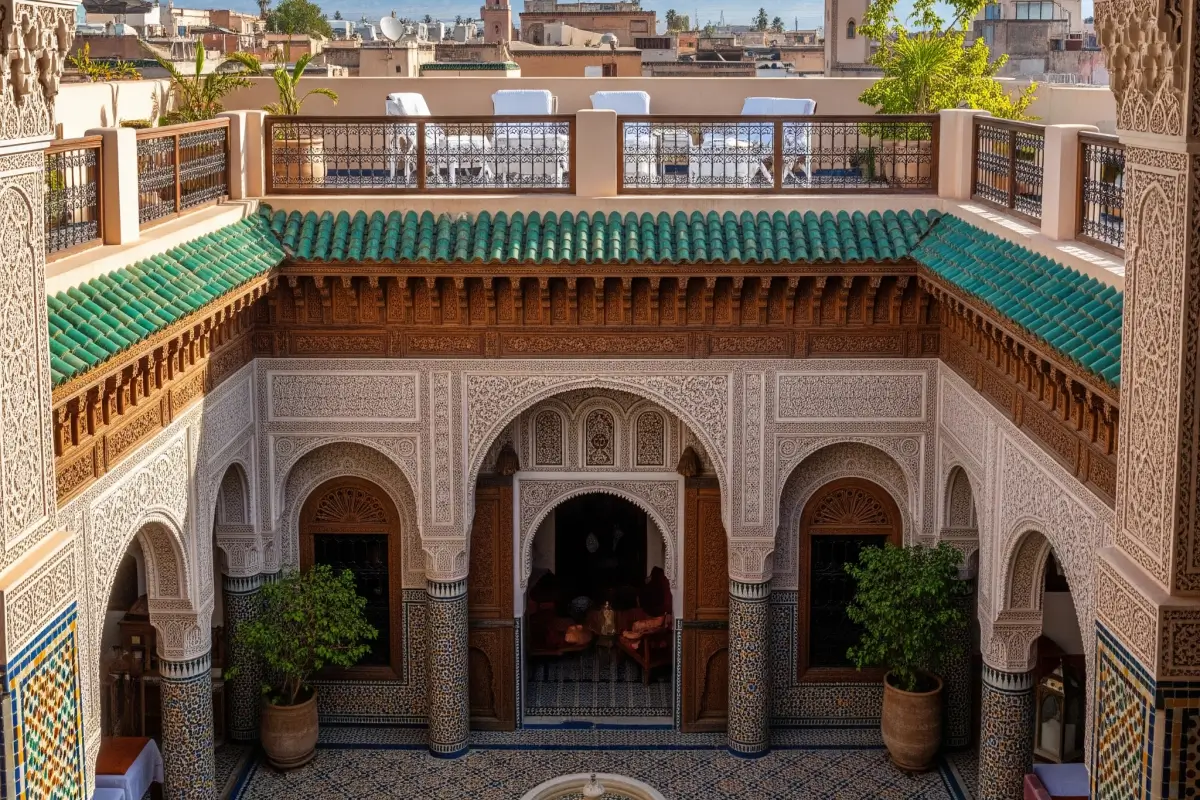
The Beautiful Moroccan Riad Architecture
Table of Contents
Moroccan Riad Architecture at a Glance
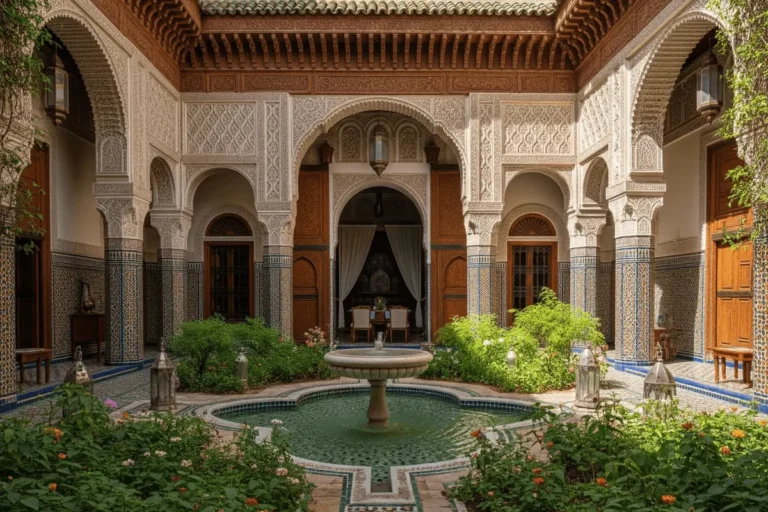
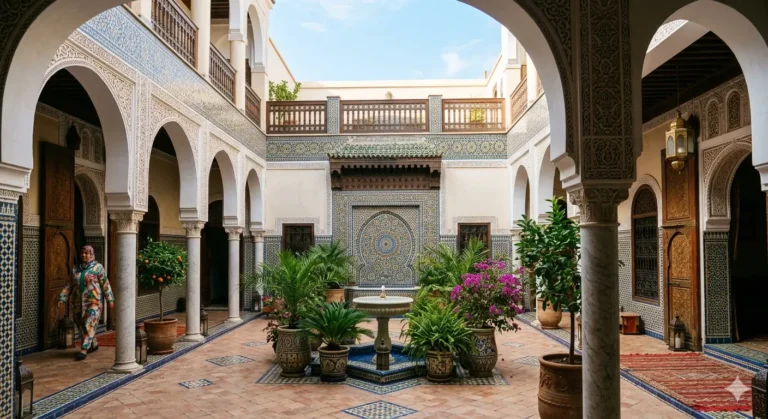
Moroccan riad architecture centers on an inward-facing courtyard, where privacy, shade, water, plants, and decorative craftsmanship create a calm home inside the busy medina. A traditional riad often combines fountains, zellige tiles, carved cedarwood, stucco plasterwork, roof terraces, and rooms arranged around the central garden.
This guide explains how riads work as architecture: their courtyard layout, design elements, history, guest experience, and restoration value. For the wider context of Moroccan building traditions, see this guide to architecture in Morocco.
| Riad feature | Purpose | Why it matters |
|---|---|---|
| Central courtyard | Light, ventilation, privacy, and family life | It is the heart of the riad and the reason the house feels calm from the inside. |
| Fountain and plants | Cooling, sound, and atmosphere | Water and greenery soften the interior and reflect the garden meaning of the word riad. |
| Zellige tilework | Color, geometry, and surface decoration | It gives riad walls, fountains, and floors their recognizable Moroccan identity. |
| Cedarwood and plaster | Ceilings, doors, arches, and wall details | These handmade details connect riads to Moroccan artisan traditions. |
| Roof terrace | Outdoor living, dining, and city views | It adds another private living space above the medina. |
The Soul of Moroccan Living: What Makes Riad Architecture Unique?
At its core, a Moroccan Riad is more than just a building—it’s a carefully designed sanctuary centered around a lush courtyard. The word “Riad” itself comes from the Arabic word for garden, and this idea forms the conceptual and literal heart of every Riad.
These homes traditionally reflect Islamic architectural principles and Moroccan traditions, emphasizing privacy and inward focus. From outside, a Riad may appear modest and minimalist, but once inside, you’re transported to an intimate world bursting with texture, life, and artistry. Think of it as a personal paradise—a space to breathe and reconnect with nature in its most refined form.
Why is this design so unique?
- A Focused Tranquility: The inward-facing design ensures that daily life revolves around the central courtyard, offering privacy from the busy streets outside.
- Dual Purpose Functionality: Riads are both personal retreats and places for hosting gatherings. This duality is expressed beautifully in the layout, where tranquility meets sociability.
- Cultural and Spiritual Connection: Every detail is imbued with cultural and religious significance, particularly the symmetrical designs and use of natural elements that echo Islamic teachings.
By preserving timeless traditions, Moroccan Riads stand as living symbols of the delicate balance between utility and beauty.
A Deep Dive Into Moroccan Riad Architecture and Design Elements
Moroccan Riads aren’t just homes; they are masterpieces—each element carefully pieced together by generations of highly skilled artisans. Let’s explore the features that make these structures so captivating.

By C messier – Own work, CC BY-SA 4.0, Link
1. The Courtyard: The Heart of Every Riad
Step into the courtyard, and you’ll feel the essence of a Riad come alive. At the center, you’ll often find a fountain or lush greenery—a representation of the gardens of paradise as described in Islamic culture. The courtyard provides not only a visual center but a functional one, helping to cool and ventilate the entire home during Morocco’s hot summers.
Imagine sipping on mint tea as the gentle sound of trickling water echoes around you. This serene space is designed to soothe the soul and invite reflection. Its practical design merges beautifully with its spiritual and aesthetic purposes, making it an unparalleled architectural signature.
2. Zellige Tiles: The Jewel of Moroccan Artistry
Riads are adorned with dazzling zellige tiles—meticulously hand-cut mosaics arranged in symmetrical patterns. These tiles are more than decoration; they are a testament to Morocco’s dedication to craftsmanship.
Each tile is unique, combining vibrant colors like cobalt blue, emerald green, and saffron yellow into intricate designs. These patterns often reflect Islamic geometry, symbolizing harmony, unity, and infinity—the perfect complement to the peaceful ethos of the Riad.
Whether framing courtyards, adorning walls, or enhancing fountains, zellige tiles are a defining feature of Riad design.
3. Cedarwood Carvings and Stucco Plasterwork
A Riad would not be complete without its ornate ceilings and walls decked with Moroccan wood carving and Moroccan gypsum art. These details are precise, intricate, and rooted in Islamic and Moroccan design traditions, often showcasing floral motifs, geometry, or Arabic calligraphy.
The cedarwood, sourced from the Atlas Mountains, not only contributes to the home’s organic feel but also tells a story of sustainability and local craftsmanship. It’s fascinating to think of the hands that have carved these mesmerizing details, passing their skills down through the generations.
4. The Riad Roof Terrace: A Hidden Treasure Above the Cityscape
One of the most cherished features of a Moroccan Riad is its roof terrace. Imagine standing above the city, gazing at the medina’s labyrinth below, as the sun sets and darkness unveils a blanket of stars.
Originally, these terraces were private spaces for drying laundry or preparing food. Over time, they’ve evolved into cherished gathering spots where guests can relax, dine, or take in the views of cities like Marrakech, Fes, and Essaouira. It’s here that modern comfort meets historic charm.
Historical Glimpses: The Origins and Evolution of Riads in Morocco
.jpg#/media/File:DSC_0806_(8189404240).jpg)
By satanoid from Austin, TX, USA – DSC_0806, CC BY 2.0, Link
Ancient Roots in Islamic and Andalusian Design
The Riad’s story begins centuries ago, under the influence of Islamic and Andalusian architectural principles. These structures were designed to embrace inward-focused layouts, providing privacy for families and aligning with Islamic beliefs concerning modesty and tranquility.
The impact of Muslim Spain is seen in the symmetrical gardens, water features, and use of materials like mosaics and carved wood. These homes became living representations of cultural sophistication, blending function with artistry.
Colonial and Modern Impact on Riad Restoration
By the 20th century, many original Riads had fallen into disrepair. But with Morocco’s growing popularity as a tourist destination, they were rediscovered and restored—often transformed into boutique hotels or guesthouses.
Today, staying in a Riad offers a glimpse back in time while enjoying modern comforts. French colonial influence is evident in some restorations, but efforts are focused on preserving traditional elements, keeping the spirit of Moroccan craftsmanship alive.
Moroccan Riads in Modern Design and Travel
Staying in a Riad: What to Expect as a Guest
When you stay in a Riad, you step into a haven of authenticity. Unlike cookie-cutter hotels, Riads immerse you in Moroccan culture. Imagine waking up to sunlight streaming into the courtyard, feasting on traditional meals like tagines and pastilla, and enjoying mint tea under a canopy of stars on the rooftop.
Cities like Marrakech and Fes are hotspots for Riad accommodations. These spaces have been thoughtfully restored to offer modern amenities while retaining their cultural essence. You’ll love the intimate atmosphere, personalized service, and the sense of being part of Morocco’s living history.
Renovating or Buying a Riad: What You Need to Know
Dreaming of owning your own Riad? Renovating these historic gems is no small feat. Elements like zellige tiles, plasterwork, and cedarwood carving are labor-intensive processes, requiring skilled artisans and authentic materials.
The key is balancing modern amenities with respect for tradition. Many homeowners integrate eco-friendly solutions, blending modern sustainability with ancient design principles—a practice that’s increasingly popular with tourists and locals alike.
A Taste of a Riad’s Culinary Flair
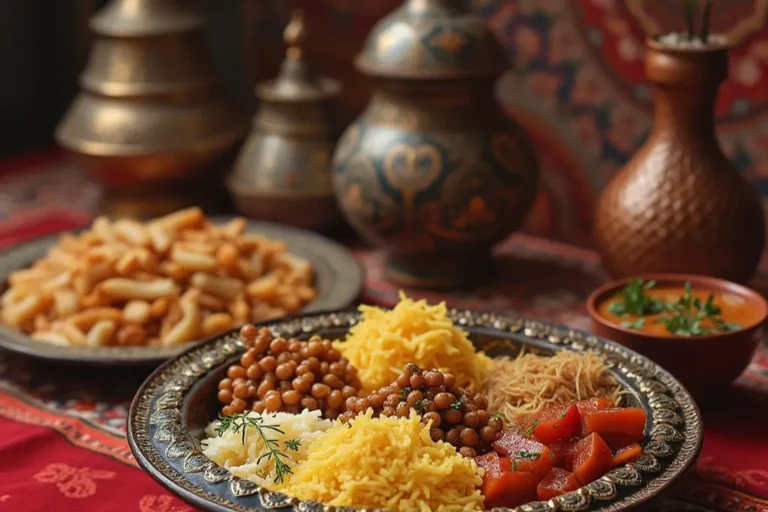
Food in a Moroccan riad is best understood as part of the guest experience rather than a separate recipe topic. Mint tea, seasonal dishes, and shared meals are often served around the courtyard or on the roof terrace, reinforcing the riad’s role as a private, welcoming space where architecture, hospitality, and daily life meet.
Why Riads Are Treasured Today: Cultural and Historical Significance
Beyond their beauty, Riads are vital to Morocco’s cultural identity. They showcase the country’s artisanal crafts, from tile-making to woodworking, which might otherwise be lost in an industrialized world.
Many Riads have embraced sustainable restoration practices, aligning perfectly with the rise in eco-tourism. With every restored home, Morocco preserves a piece of its artistic and architectural legacy, welcoming visitors to share in its enduring magic.
Conclusion: Stepping Into the History of Morocco One Riad at a Time
Every Riad tells a story—of artistry, culture, and the balance between practicality and serenity. From their tranquil courtyards to their scenic rooftops, Riads invite you to explore a timeless world where design meets tradition.
Ready to experience the magic for yourself? Whether you’re booking a stay, planning a renovation, or simply dreaming of Moroccan getaways, Riads offer an unforgettable journey into the heart of Morocco’s soul.
Call to Action: Begin your Riad adventure now. Book an authentic stay or start planning your dream Riad restoration project today!
Did you find this article helpful?
Rate it now and help us deliver better content:
There are no reviews yet. Be the first to share your feedback!