Moroccan Architecture: A Fusion of Tradition and Modernity in Urban Spaces
Table of Contents
Modern Moroccan architecture blends traditional riad courtyards, zellige tiles, arches, plasterwork, wood, colour, and local materials with contemporary urban layouts. This article is a focused companion to the broader guide on Moroccan architectural styles, with emphasis on modern buildings, interiors, sustainability, and urban design.
Modern Moroccan Architecture at a Glance
| Element | Traditional source | Modern use |
|---|---|---|
| Courtyards | Riads and inward-facing homes | Light, privacy, ventilation, and calm urban living |
| Zellige | Hand-cut geometric tilework | Accent walls, fountains, floors, and hotel interiors |
| Gypsum plasterwork | Carved arches, ceilings, and decorative panels | Refined interior details and heritage-inspired finishes |
| Tadelakt | Polished lime plaster | Bathrooms, hammams, spa spaces, and smooth wall finishes |
| Wood and texture | Cedar doors, screens, and ceilings | Warmth, shadow, and crafted contrast in modern interiors |
Moroccan Architecture: A Fusion of Tradition and Modernity in Urban Spaces
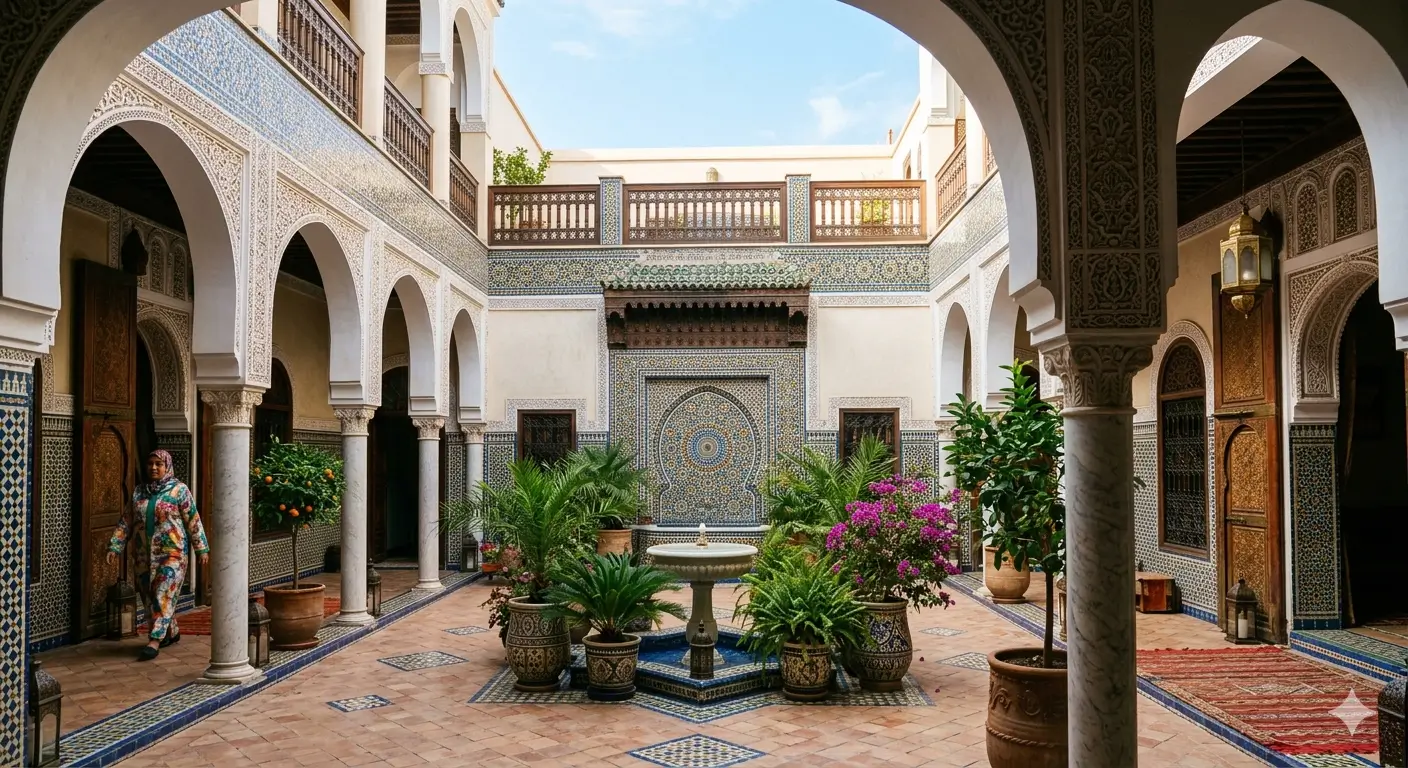
The architectural landscape in Morocco is a testament to its rich history. The use of traditional materials like clay, stone, and wood reflects the region’s heritage. The intricate tile work, known as zellige, is a hallmark of Moroccan design, adding colour and vibrancy to structures. This blend of old and new is evident in cities like Marrakech and Casablanca, where modern buildings coexist with historic sites.
The Influence of Traditional Moroccan Design on Contemporary Architecture Morocco
Traditional Moroccan design plays a significant role in shaping contemporary architecture. Elements such as arches, courtyards, and intricate plasterwork, including Moroccan gypsum art, are often incorporated into modern buildings. This influence can be seen in the way contemporary architects draw inspiration from historical motifs while integrating modern functionality. The result is a harmonious balance that respects the past while catering to present-day needs.
Architects are increasingly using traditional techniques alongside modern materials to create innovative designs. This approach not only preserves cultural identity but also promotes sustainability by utilising local resources. By blending these styles, contemporary architecture in Morocco tells a story that resonates with both locals and visitors alike.
Exploring Moroccan Architectural Styles in Urban Development
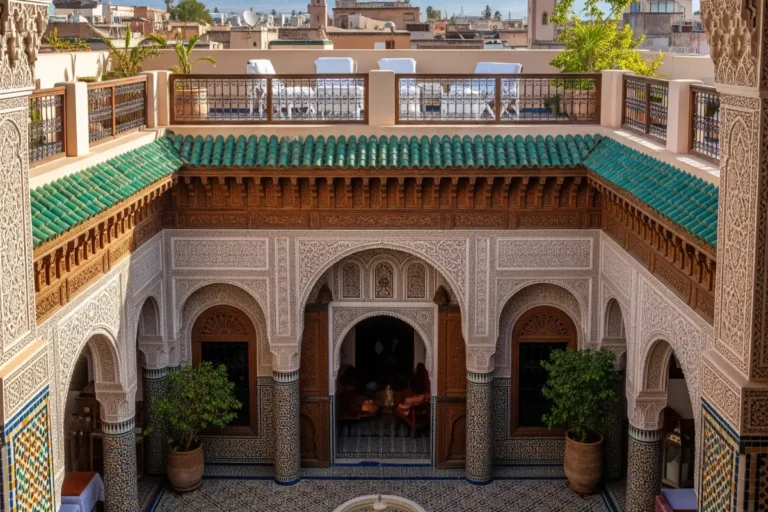
Moroccan architectural styles vary significantly across regions, each reflecting local customs and traditions. In urban development, these styles contribute to a unique identity for cities. For instance, the riad, with its central courtyard and intricate tile work, remains a popular choice for residential designs. Meanwhile, modern buildings often feature clean lines and open spaces, catering to contemporary lifestyles. The enduring appeal of Moroccan riad design shows how private courtyards continue to shape modern living.

By Ekaterina Kvelidze – Own work, CC BY-SA 4.0, Link
The fusion of these styles enhances urban spaces, creating environments that are both functional and visually appealing. The integration of traditional elements into new developments fosters a sense of continuity, allowing residents to connect with their cultural heritage while enjoying modern amenities.
Key Elements of Moroccan Interior Style in Modern Spaces
Moroccan interior style is characterised by its rich textures and vibrant colours. Key elements include intricate tile patterns, plush textiles, and ornate lighting fixtures. These features create warm and inviting spaces that reflect the essence of Moroccan culture. In modern settings, designers often incorporate these elements to add character and depth to interiors.
Using bold colours like deep reds, blues, and greens can transform a space into a lively oasis. Layering textiles, such as cushions and rugs, adds comfort while showcasing traditional craftsmanship. The careful selection of furniture pieces that echo Moroccan design further enhances the overall aesthetic.

By Ekaterina Kvelidze – Own work, CC BY-SA 4.0, Link
The Role of Colour and Texture in Moroccan Architecture
Colour and texture play pivotal roles in Moroccan architecture. The use of earthy tones combined with vibrant hues creates a dynamic visual experience. Textures derived from natural materials add depth and interest to surfaces, making spaces feel more inviting. The interplay between light and shadow enhances these features, highlighting the intricate details that define Moroccan design.
Sustainable Practices in Contemporary Moroccan Architecture
Sustainability is becoming increasingly important in contemporary architecture in Morocco. Many architects are now prioritising eco-friendly materials and energy-efficient designs. Traditional building techniques that promote natural ventilation, thermal regulation, and natural finishes such as Tadelakt plaster are being revisited to reduce environmental impact.
This shift towards sustainable practices not only benefits the environment but also supports local economies by using indigenous materials and craftsmanship. As urban areas continue to grow, incorporating sustainable principles into Moroccan architecture will be essential for creating resilient communities that honour their heritage while looking towards the future.
What defines Moroccan Architecture?
Moroccan architecture is characterised by its intricate designs vibrant colours and the use of natural materials. It often features ornate tile work arched doorways and elaborate stucco carvings. This style reflects a blend of Berber Arab and French influences showcasing the rich cultural heritage of Morocco.
How does Traditional Moroccan Design influence modern buildings?
Traditional Moroccan design plays a significant role in contemporary architecture by incorporating elements like zellige tiles riads and courtyards into modern structures. Architects often blend these classic features with minimalist aesthetics to create spaces that honour heritage while meeting modern needs.
What are the main Moroccan Architectural Styles?
Moroccan architectural styles include Islamic Moorish and Berber influences. Each style brings unique characteristics such as the use of geometric patterns in Islamic design or the earthy tones found in Berber homes. These styles can be seen across various regions contributing to the diverse architectural landscape of Morocco.
What is the essence of Moroccan Interior Style?
The essence of Moroccan interior style lies in its warmth and richness. It often features bold colours intricate textiles and handcrafted furniture. Elements like lanterns poufs and mosaic tables create inviting spaces that reflect the country’s artistic traditions while providing comfort and functionality.
How is Contemporary Architecture in Morocco evolving?
Contemporary architecture in Morocco is evolving by integrating sustainable practices and modern materials while respecting traditional aesthetics. Architects are increasingly focusing on eco-friendly designs that harmonise with the environment creating innovative urban spaces that still pay homage to Morocco’s architectural heritage.
Conclusion
Moroccan architecture beautifully blends traditional Moroccan design with contemporary influences showcasing a variety of Moroccan architectural styles that enhance urban spaces. This unique fusion creates stunning environments that reflect both heritage and modernity making Moroccan interior style a must-explore for enthusiasts. Don’t miss out on experiencing the charm of contemporary architecture in Morocco—start your journey today!
Did you find this article helpful?
Rate it now and help us deliver better content:
There are no reviews yet. Be the first to share your feedback!